
Dreamforce 2026 is officially underway, and Day 1 came with a lot to unpack.
Agentforce is still at the center, but the conversation has expanded beyond simply building AI agents.
Salesforce is now talking about where those agents work, which models power them, how they access enterprise context, and how businesses can manage them once they start operating across multiple systems.
From AIforce and Koa to new Agentforce agents, deeper Claude and Slack experiences, and enterprise AI governance, here are the announcements that stood out from Day 1.
One of the biggest Day 1 announcements was AIforce, Salesforce’s new interface layer for enterprise AI.
The idea is to make Salesforce data, workflows, business logic, permissions, and actions available inside other AI experiences instead of making users return to CRM for every task.
Claude, Slack, and Agentforce Coworker are some of the first places where this approach is showing up, giving users more ways to work with Salesforce context without constantly switching between tools.
Claude and Slack were both central to the Day 1 story.
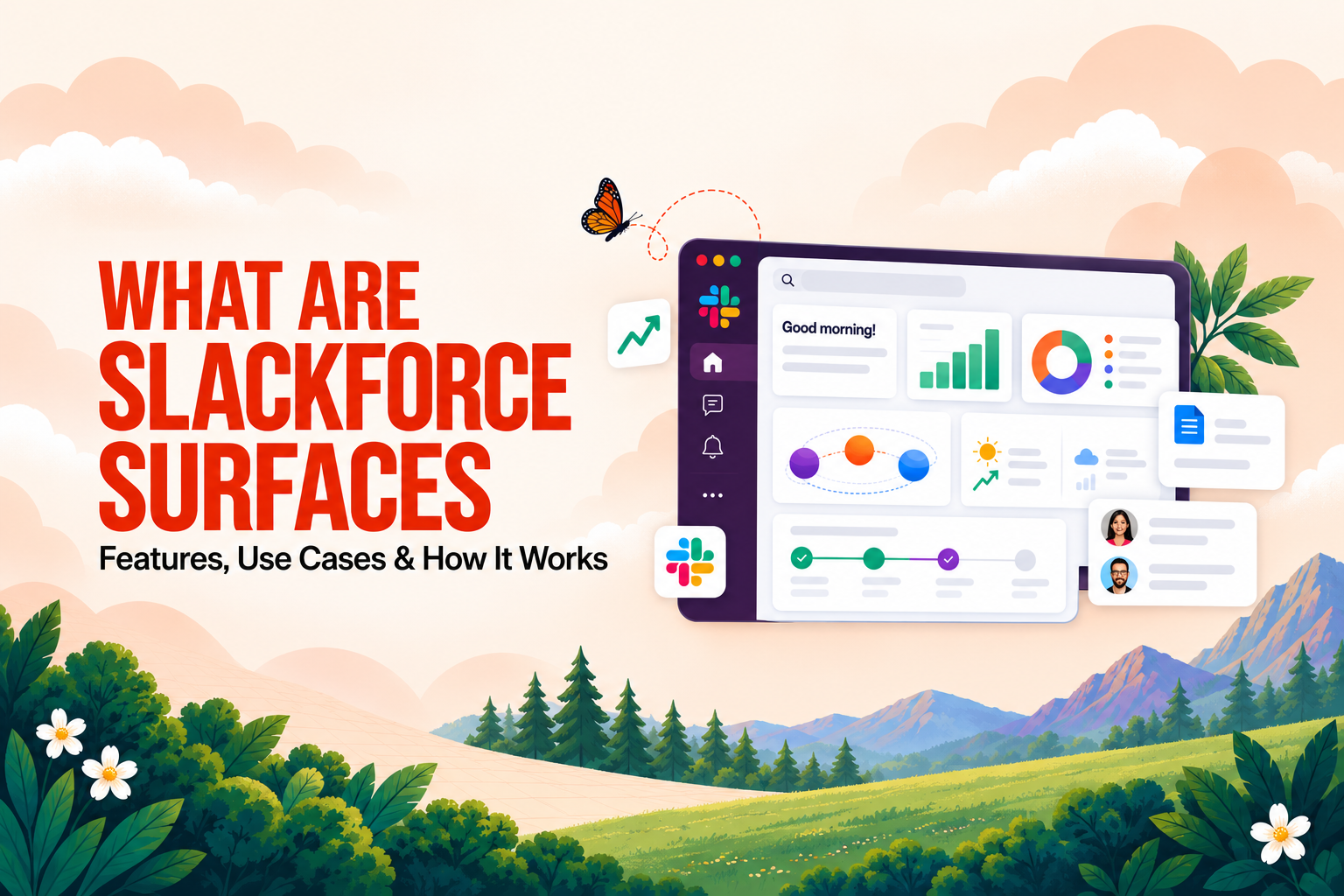
Salesforce showed how Claude can work with Salesforce context for tasks like pipeline reviews, prospecting, and account work, while Slackforce brings CRM data and actions directly into Slack.
Salesforce wants people to be able to work with CRM information from the tools they are already using instead of treating Salesforce as the only place where the work happens.
Salesforce also introduced Koa, its first CRM reasoning model developed with NVIDIA. Koa is designed specifically around CRM workflows such as lead qualification, case routing, opportunity management, and multi-step business processes.
Salesforce is still keeping its broader multi-model strategy, so Koa is not replacing Claude, Gemini, or other models. It simply gives customers another model built specifically around Salesforce-style work.
Another noticeable shift is how Salesforce is positioning Agentforce.
Instead of focusing only on tools that help businesses build agents from scratch, Salesforce is introducing more agents designed around specific roles, including:
The goal is to give companies a stronger starting point and then let them configure those agents around their own data and processes.
As Salesforce talks about deploying more agents across the enterprise, it is also putting more attention on governance, security, and control.
Technologies such as Agent Fabric, Salesforce Guardian, and the broader Trusted Enterprise AI Harness are meant to help businesses understand which agents are running, what they can access, how they behave, and whether they are following company policies.
This part of the story may be less flashy than the demos, but it is likely to become much more important as companies move from a few AI pilots to much larger agent deployments.
The customer examples helped make the Day 1 announcements more practical.
Siemens showed how Agentforce can support inbound sales and operational workflows, while Air India shared how it is using Agentforce across service processes such as refunds and passenger name changes.
These examples showed the direction Salesforce is pushing toward: agents that do more than answer questions and are increasingly involved in real business processes across systems.
Another thing that stood out on Day 1 was just how open Salesforce wants its AI strategy to be. Even as it builds more of its own stack with products like Koa, it is still leaning heavily into partnerships with Google Cloud and AWS.
With Google Cloud, Salesforce is connecting its headless architecture with Gemini Enterprise, so agents can work with Salesforce business context across both platforms.
The AWS partnership is expanding too, with more connections across models, agents, enterprise data, and the tools employees already use.
Salesforce is building more of the AI stack itself, but it is still leaving the door open for customers to choose the models and platforms that fit their business.
If we had to sum up Dreamforce 2026 Day 1 in one line, it would be this:
Salesforce is moving from helping businesses build AI agents to building the full environment those agents need to actually work.
That is where Day 1 landed.
And with Day 2 and Day 3 still to come, there is plenty more to watch.
We’ll keep updating this Dreamforce 2026 recap as the event continues. Till then, stay tuned.

5+ years of experience in content strategy, marketing, and technical communication. At MIDCAI, I focus on turning ideas around Salesforce, data, and AI into clear, actionable insights that help enterprises attract the right audience and drive real adoption.
Get in touch with us for any enquiries and questions
Define your goals and identify areas where technology can add value to your business
We are looking for passionate people to join us on our mission.
where your skills fuel innovation and your growth powers ours