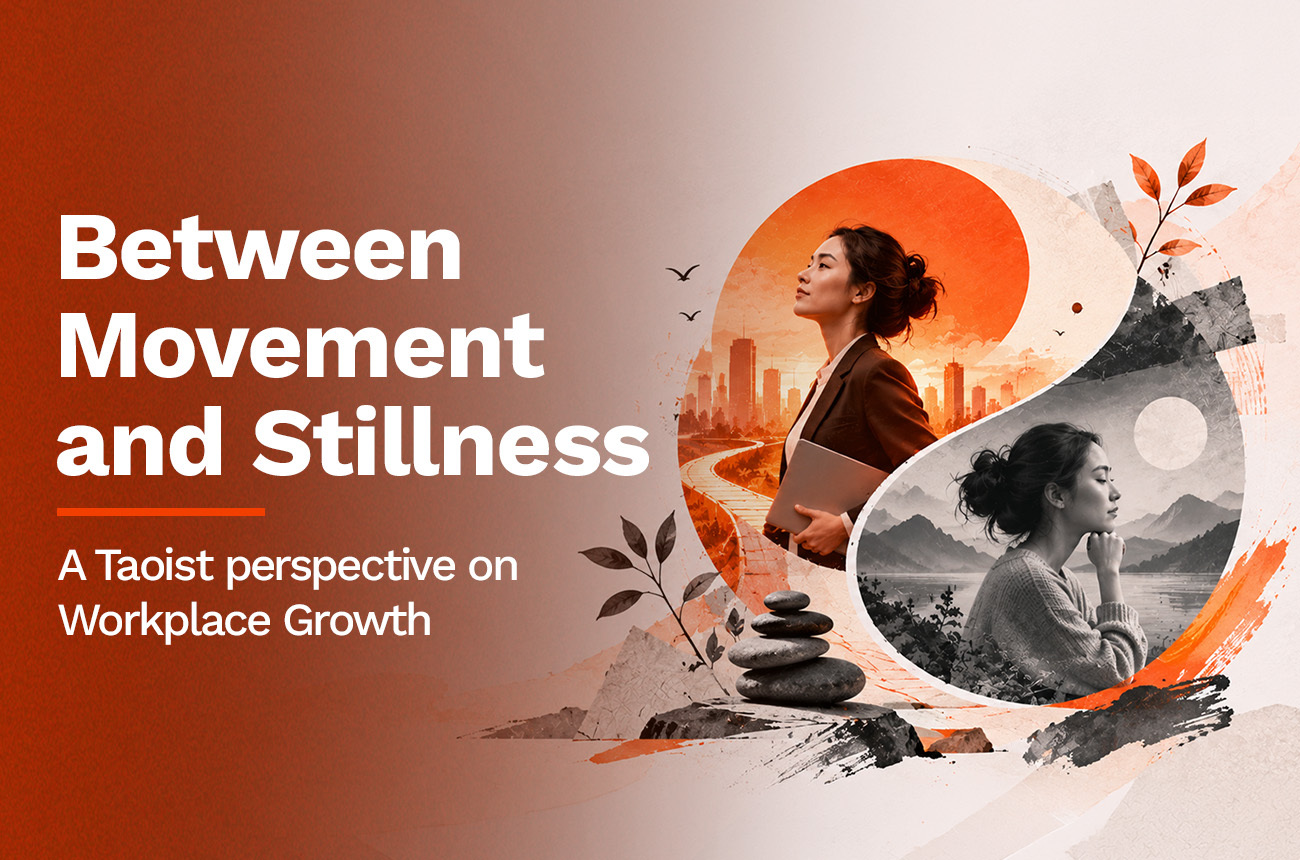
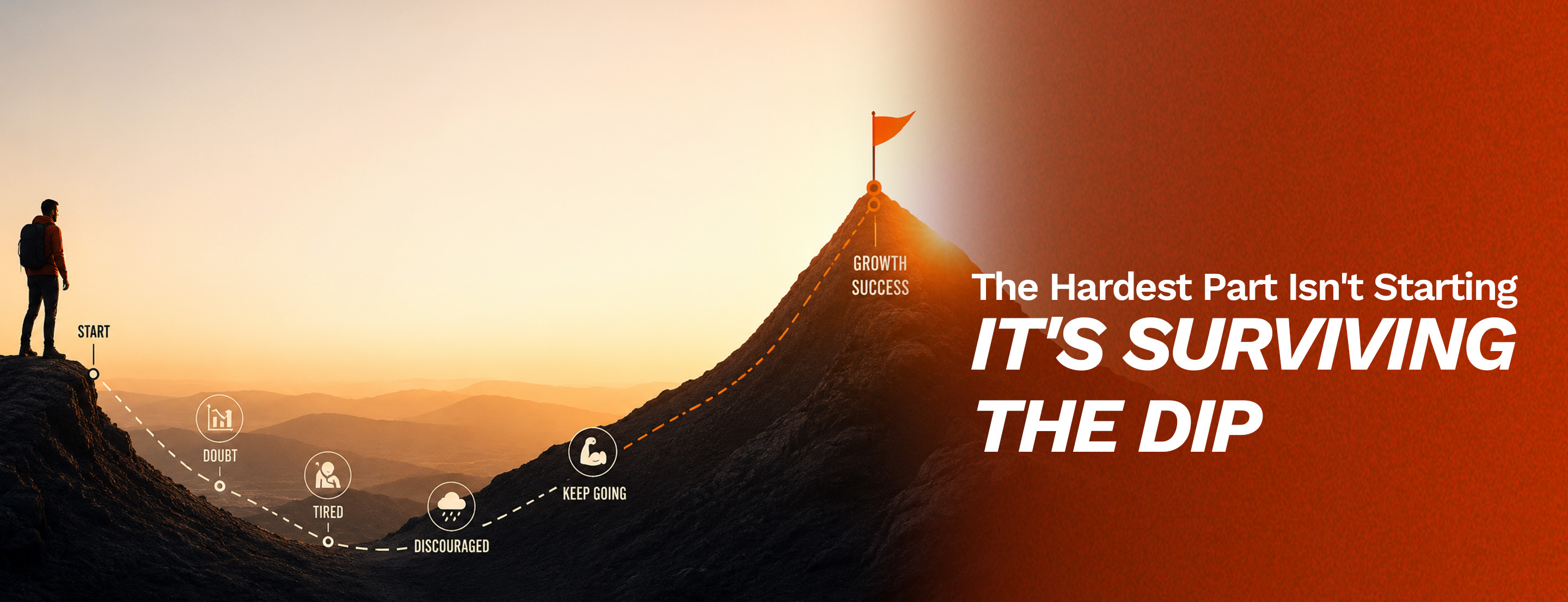


"Every worthwhile journey has a phase where progress feels invisible. That's the dip. Most people mistake it for failure."
— Inspired by Seth Godin's concept of The Dip
version of yourself. The beginning is full of hope. You imagine where you'll be in a few months, the skills you'll learn, and the confidence you'll gain. You tell yourself, "This is going to be the turning point."
But then reality arrives.
The learning curve becomes steeper than expected. Everyone around you seems to know what they're doing. New terms sound like a different language. Progress feels painfully slow. You start questioning whether you belong there in the first place.
This is what Seth Godin calls "The Dip."
It's that uncomfortable stretch between the excitement of starting and the satisfaction of becoming good. And it's where most people quietly give up.
One of the most misunderstood parts of Seth Godin's philosophy is that The Dip isn't an argument against quitting, it's an argument for quitting the wrong things.
Sometimes, walking away is the right decision. If you're on a path that no longer aligns with your values or leads nowhere meaningful, quitting can be an act of wisdom.
But that's not the kind of quitting Godin warns us about.
He talks about the moment when we abandon something simply because it becomes difficult. When the initial excitement fades, progress slows down, and self-doubt grows louder than purpose.
That's the dip.
It's the point where most people confuse discomfort with failure. The ones who emerge stronger aren't necessarily the most talented. They're the ones who learn to distinguish between a dead end and a difficult road and have the patience to keep walking when the road is still worth it.
People often imagine turning points as grand moments. Mine wasn't. It looked like showing up to work every day while quietly wondering if I belonged there.
When I entered the IT industry, I joined as an HR Manager. But deep down, I knew I wanted to build a career in technology. The challenge was that I was stepping into a world I barely understood. Salesforce, QA, and even everyday technical conversations felt like a foreign language. I kept waiting for everything to click.
It didn't.
What grew instead was self-doubt. "Maybe everyone else is naturally better at this." "Maybe I've started too late." "Maybe this just isn't for me."
Looking back, technology wasn't my biggest challenge.
Overthinking was.
It quietly chipped away at my confidence. Every comparison felt like proof that I wasn't good enough, and eventually, I even questioned whether I should continue. Then I made one simple decision: I enrolled myself in a Salesforce course.
Not because anyone asked me to. But because I wanted to answer one question:
Had I really reached my limit, or had I simply not given myself a fair chance?
That decision changed everything.
The concepts didn't become easy overnight, but they became less intimidating. Confusion slowly turned into curiosity, and learning stopped being about proving myself to others. It was about becoming a little better than I was yesterday. That's what surviving the dip really is.
Not an overnight transformation but the quiet decision to keep going when giving up feels easier.
Confidence rarely appears overnight. It grows through evidence. One concept understood. One assignment completed. One mistake corrected. One certification earned. One task that feels slightly easier than it did yesterday.
Somewhere along the journey, I cleared my Salesforce Certified Administrator certification. It wasn't just another certificate. It was proof that persistence often succeeds where confidence doesn't.
Today, nearly three months into my QA internship journey within the same company, I find myself testing Salesforce applications, writing test cases, understanding business requirements, and preparing to successfully complete my internship.
If someone had shown me this version of myself a year ago, I probably wouldn't have believed them.
One of the biggest misconceptions about growth is believing that difficulty is a sign you're not meant for something. Often, the opposite is true.
The harder something is to learn, the more valuable it becomes once you understand it. Every meaningful skill has its own dip. Learning a language.nBuilding a business. Leading a team. Writing consistently. Working in technology. No one skips it.
The only difference is that successful people don't interpret the dip as the end of the journey. They see it as part of the journey.
If You're in Your Own Dip
Now the question arises for now is that if you right now in your own dip. Maybe you're learning a new technology. Maybe you've recently changed careers. Maybe you've joined a new company and feel completely out of place. Or maybe you're simply wondering whether you're good enough.
Here's something I wish someone had told me earlier:
The dip is uncomfortable. But it is also temporary. Don't judge your future based on a chapter that was always meant to be difficult. Keep learning. Keep asking questions. Keep showing up. Sometimes the breakthrough you're waiting for isn't another opportunity. It's simply another month of not giving up.
Looking back, I realize my journey was never really about Salesforce, a certification, or even transitioning into QA. It was about learning how to stay when every instinct told me to leave.
That's what The Dip taught me.
Growth isn't measured by how enthusiastically we begin. It's measured by how we respond when the excitement disappears and only discipline remains. We all face our own dip in our careers, relationships, ambitions, or personal growth. The question isn't whether you'll encounter it. You will.
The real question is this:
Are you standing at a dead end or are you simply in the dip?
Because if it's the dip, don't mistake it for the end of your story. It may just be the chapter where you're becoming the person capable of writing the rest.

Currently working as a QA Intern at MIDCAI, I’m learning the ropes of software testing, understanding project workflows, and growing through hands-on experience in a fast-paced environment. Beyond tech, I’m deeply interested in writing, workplace dynamics, and exploring the realities of office culture through observations and conversations.
Get in touch with us for any enquiries and questions
Define your goals and identify areas where technology can add value to your business
We are looking for passionate people to join us on our mission.
where your skills fuel innovation and your growth powers ours

.jpg)