

We live in a world that has learned to associate movement with progress. At work, we are encouraged to learn faster, respond sooner, take initiative, meet deadlines, and keep moving towards the next milestone. A busy calendar can feel like evidence of ambition, while a quiet period can sometimes make us wonder whether we are doing enough.
Over time, we may begin to measure our growth by how much we do, how quickly we learn, and how visibly we progress.
But there is another side to growth that is much harder to measure. It happens when we pause to reflect on a mistake, listen instead of immediately responding, acknowledge what we do not know, or allow ourselves time to understand something before attempting to master it.
These moments may not look like progress. Yet they can change the way we approach our next challenge.
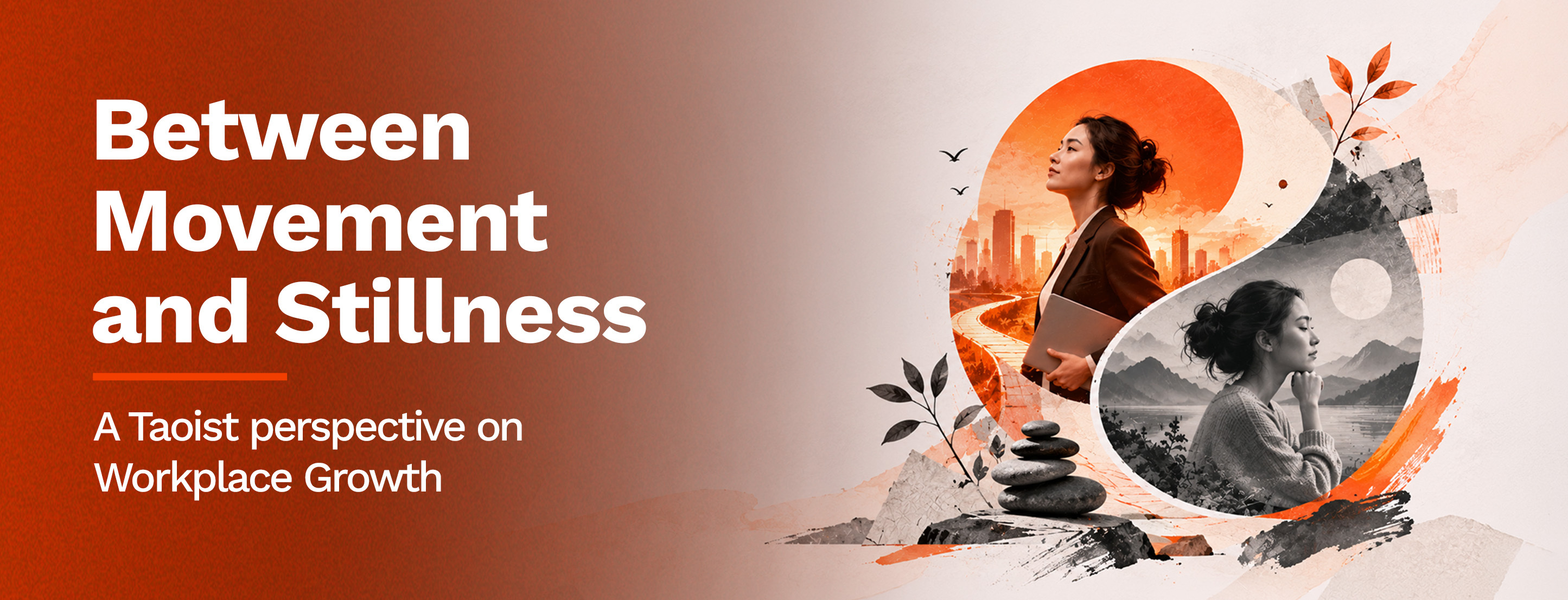
This brings us to an interesting idea from Taoist philosophy: Yin and Yang, and the relationship between movement and stillness.
In ancient Chinese philosophy, Yin and Yang describe complementary aspects of reality. Yin is traditionally associated with stillness, darkness, receptivity, and inwardness, while Yang is associated with movement, light, activity, and outward expression.
It is tempting to interpret them as opposing forces, with one needing to overcome the other. But their deeper significance lies in their relationship. Neither is inherently superior, and neither exists entirely independently of the other. They are interconnected, constantly influencing and transforming into one another.
Consider the transition from night to day. Darkness gradually gives way to light, and eventually, daylight recedes into darkness again. Nature does not remain permanently in one state. Each phase belongs to a larger cycle.
The familiar Yin-Yang symbol captures this relationship through its curved halves and the small dot of each colour within the other. It suggests that even within one state, the possibility of another is already present.
Applied to our professional lives, this offers a useful perspective. We often think of growth as movement alone: acquiring skills, taking action, solving problems, and achieving results. But perhaps meaningful growth also requires its quieter counterpart: reflection, observation, patience, and the willingness to reconsider what we believe we know.
Think about the qualities we commonly associate with a capable professional. We admire people who make decisions quickly, communicate confidently, take ownership, and find solutions under pressure. These qualities matter, particularly in environments where time and accountability are important.
But when constant movement becomes the only accepted measure of progress, we risk overlooking the value of reflection.
A person may complete task after task without examining whether their approach is effective. Someone may respond immediately to every problem without considering whether the problem has been correctly understood. Another person may keep acquiring new skills while never allowing enough time to practise, consolidate, or connect what they have learned.
In each case, activity is taking place, but activity alone does not guarantee development.
Reflection introduces a different kind of effort. It asks us to examine our decisions, recognise patterns, question assumptions, and understand the consequences of our actions. This work is less visible than completing a task, but it helps us approach future tasks with greater awareness.
Imagine two professionals who make the same mistake. Both correct it and deliver the required result. One immediately moves to the next task. The other takes a little time to understand why the mistake happened and what could prevent it from recurring.
The immediate outcome may be identical. Over time, however, their experiences may lead to different levels of understanding.
The distinction is not that one person works harder. It is that one has created room for experience to become learning.
Action gives us experience; reflection helps us make sense of it.
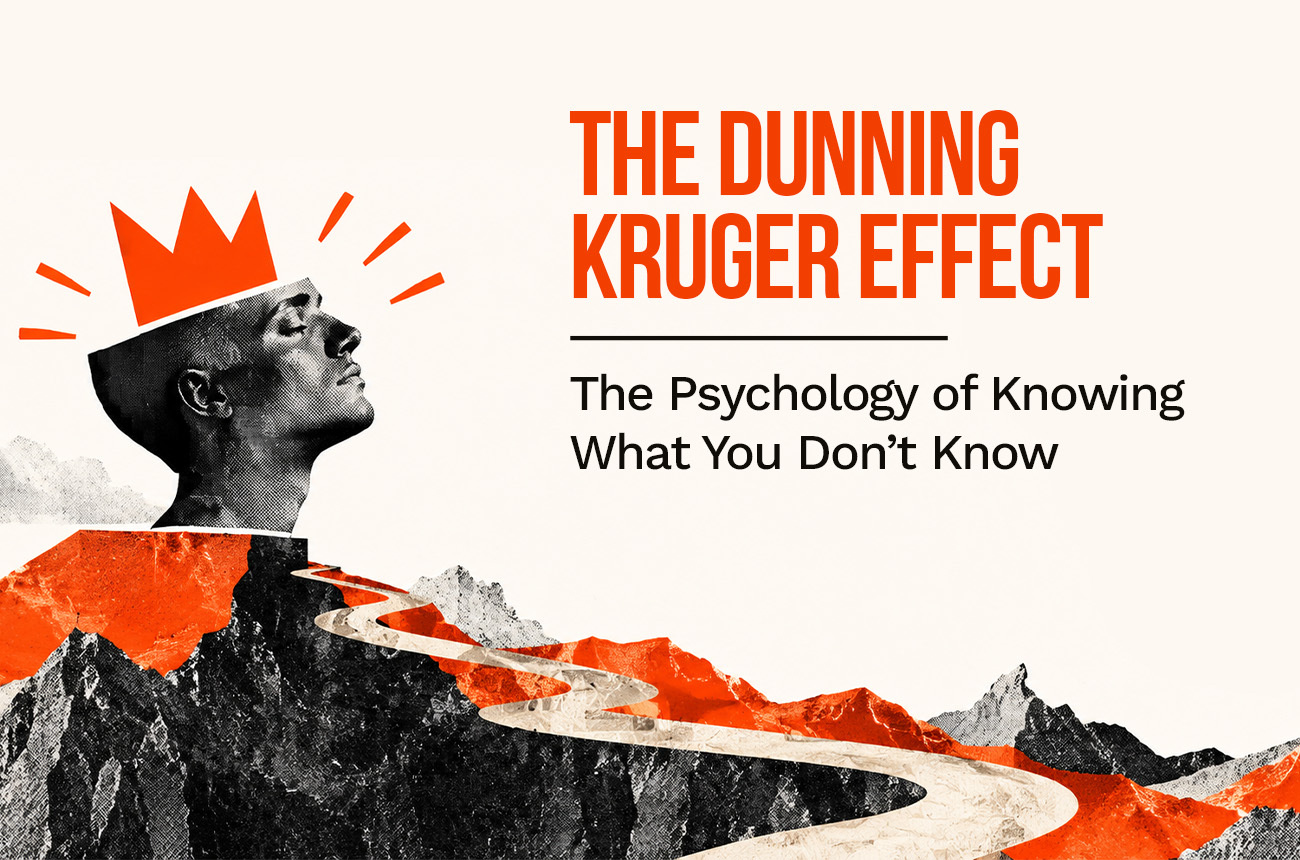
One of the most uncomfortable parts of professional growth is the moment when our understanding begins to feel incomplete.
When we first encounter a new subject, we may grasp the basic concepts and feel encouraged by our progress. As we explore further, we discover exceptions, complexities, and connections we had not previously considered. What initially appeared straightforward begins to demand more thought.
Our confidence may decrease just as our knowledge increases.
This can be unsettling, especially in workplaces where competence is often associated with having the right answers. We may hesitate to ask questions because we fear appearing inexperienced. We may rush to offer solutions because admitting uncertainty feels like losing credibility.
Yet uncertainty can serve a valuable purpose. It reveals the limits of our current understanding and shows us where further learning is needed.
The space between believing we understand something and recognising how much remains to be learned can be uncomfortable. But it can also be productive, provided we remain willing to learn and eventually put that learning into practice.
This does not mean that every doubt is a sign of progress or that confidence should always be questioned. It means that confidence becomes more reliable when it can coexist with humility.
A professional who can say, “I understand this part, but I need to explore that part further,” is not necessarily less capable than someone who responds with immediate certainty. They may simply have developed a more accurate understanding of their own abilities.
In the language of Yin and Yang, confidence and humility need not be enemies. They can complement each other, allowing us to act with conviction while remaining open to correction.
Stillness is often misunderstood as inactivity. At work, pausing can feel uncomfortable because there is always another task waiting, another deadline approaching, or another expectation to meet.
But a pause can change the quality of our next action.
Consider receiving critical feedback. Our first reaction might be defensive. We may focus on the wording, the circumstances, or the parts of the feedback that seem unfair. If we respond immediately, we may miss an opportunity to understand what the other person is trying to communicate.
A pause creates room to separate our emotional reaction from the information being offered. It allows us to consider what is useful, what needs clarification, and what we might do differently.
Eventually, that reflection has to lead somewhere. We may change our approach, ask a better question, practise a skill, or have a more constructive conversation.
The pause has become movement.
The same principle applies to mistakes, difficult decisions, and unfamiliar responsibilities. Sometimes, stepping back helps us see what moving continuously prevented us from noticing.
Of course, reflection can also become avoidance. We can spend so much time analysing a decision that we never make it. We can keep preparing because we are afraid of being judged. We can wait for complete certainty in situations where certainty is impossible.
This is where the relationship between Yin and Yang matters. Stillness is not a substitute for action, just as action is not a substitute for thought.
The purpose of a pause is not to remain still forever. It is to make the next movement more considered.
We often imagine professional development as a steady upward journey. We learn something, become better at it, and move on to the next challenge. Real learning, however, is rarely so predictable.
There are periods of visible progress when new concepts come together and tasks become easier. There are also periods when we feel uncertain, struggle to apply what we know, or realise that our earlier understanding was incomplete.
These periods can look like setbacks when measured against a simple idea of continuous progress.
But learning often involves revisiting what we thought we understood. We practise, reflect, make adjustments, and try again. Some progress becomes visible only after repeated attempts; some becomes apparent only when we encounter a familiar problem in a new context.
The Taoist idea of transformation offers a useful way to view these changing phases. A period of action may be followed by one of observation and consolidation. A period of uncertainty may lead to a more informed attempt. A period of rest may restore the attention needed to continue.
This is not an argument for accepting stagnation or avoiding responsibility. Professional growth still requires effort, consistency, and accountability. Rather, it reminds us that not every phase of development produces an immediate, measurable result.
Sometimes, the most useful question is not, “Why am I not progressing as quickly as I expected?” but, “What does this stage require of me?”
The answer may be more practice. It may be a different approach. It may be feedback from someone more experienced. Or it may be the patience to let understanding develop before demanding immediate mastery.
Recognising the difference helps us respond to our circumstances rather than treating every difficult phase as proof that we are falling behind.
We often remember the visible milestones of our professional lives: the certification we earned, the project we completed, the responsibility we took on, or the skill we finally mastered. Yet behind these milestones are quieter moments that rarely receive the same recognition: the question we were finally willing to ask, the mistake we examined instead of hiding, the feedback we allowed ourselves to consider, and the uncertainty we accepted long enough to learn something new.
These moments may not look like achievements in isolation, but they can shape how we approach everything that follows.
The relationship between Yin and Yang offers no universal formula for deciding when to act and when to reflect. An urgent problem may require immediate action, while a recurring challenge may require us to step back and examine its underlying cause. Sometimes growth means speaking up when we would normally remain silent. At other times, it means listening because we have been too quick to assume we understand.
The real skill lies in recognising what a situation requires of us.
Reflection, after all, is not automatically wisdom, just as activity is not automatically progress. Reflection becomes valuable when it influences our actions, and action becomes more meaningful when it is informed by what we have learned. We need movement to test our understanding against reality, and stillness to examine what that reality teaches us.
Perhaps this is the most useful lesson we can draw from Yin and Yang. Growth is not confined to action, nor does it happen simply because we pause. It emerges through the ongoing relationship between doing and understanding, trying and reflecting, moving forward and adjusting our direction.
The real art of workplace growth lies not in choosing between action and stillness, but in learning how to move between them.
Because sometimes, progress means taking the next step. And sometimes, it means pausing long enough to understand which step is worth taking.

Currently working as a QA Intern at MIDCAI, I’m learning the ropes of software testing, understanding project workflows, and growing through hands-on experience in a fast-paced environment. Beyond tech, I’m deeply interested in writing, workplace dynamics, and exploring the realities of office culture through observations and conversations.
Get in touch with us for any enquiries and questions
Define your goals and identify areas where technology can add value to your business
We are looking for passionate people to join us on our mission.
where your skills fuel innovation and your growth powers ours

.jpg)