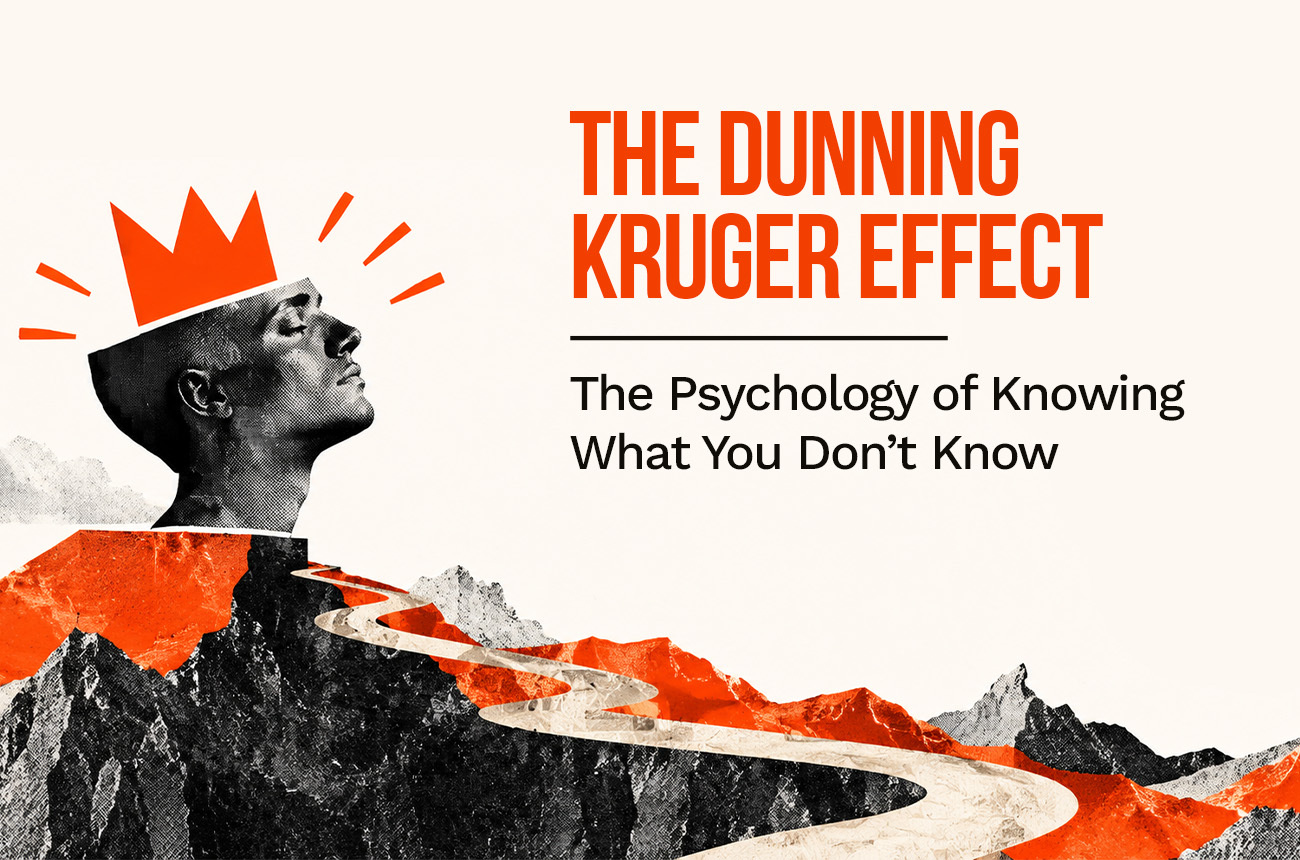



We spend years trying to understand the world around us. We study markets to make better business decisions. We analyze customer behavior to build stronger products. We invest in new technologies to stay ahead of change. We attend leadership workshops, earn certifications, and read books in the hope of becoming better professionals.
Yet, amid all this learning, we often overlook the one thing that quietly shapes every conversation, every decision, every relationship, and every ambition.
Ourselves.
Long before self-awareness became a leadership buzzword, Swiss psychiatrist and psychologist Carl Jung captured this truth in a single sentence:
"Until you make the unconscious conscious, it will direct your life and you will call it fate."
It is one of those rare quotes that becomes more profound the longer you sit with it. At first glance, it feels philosophical. But the more you observe people and perhaps even yourself, the more it begins to feel like a practical explanation for why some of our greatest challenges seem to repeat themselves.
Perhaps the biggest illusion we live with is believing that we are always making conscious choices. Often, we are simply acting out patterns we never realized were there.
Every one of us carries an internal operating system. It is built over years of experiences, successes, failures, praise, criticism, expectations, and disappointments. Over time, these experiences become beliefs, not the kind we consciously write down, but the kind that quietly influence how we interpret the world.
Some people walk into a room expecting opportunities. Others walk into the same room expecting judgment.
The mind has already made that decision long before they entered. This is what Jung meant by the unconscious. Not some mysterious concept hidden deep within psychology, but the invisible collection of assumptions, fears, habits, and beliefs that silently guide our behavior.
The unsettling part is not that these patterns exist. The unsettling part is that we often mistake them for reality.
There is a common belief that experience naturally creates better leaders. While this can be true for some people, I'm not entirely convinced.
Experience certainly teaches us what happened. But it doesn't always teach us why we reacted the way we did.
A leader may spend twenty years managing teams and still become defensive every time someone challenges an idea. Another professional may change jobs multiple times, only to find themselves facing the same frustrations in different organizations.
The environment changes. The pattern doesn't.
We often call this bad luck, difficult colleagues, poor culture, or unfortunate timing. Sometimes those explanations are true. But sometimes they become convenient ways of avoiding a far more uncomfortable possibility: What if the common thread isn't the workplace? What if it's the lens through which we're experiencing it?
Experience without reflection has a tendency to reinforce our existing patterns rather than challenge them. Self-awareness is what transforms experience into wisdom.
The Stories That Learn to Speak Before We Do
One of the most fascinating things about the human mind is that it tells stories before we even realize it's speaking.
"I'm not ready."
"They're probably judging me."
"I need to prove myself first."
"If I make a mistake, people will lose confidence in me."
Rarely do these thoughts arrive with a warning that says, This is just a belief. Instead, they arrive disguised as facts. Over time, they become the invisible script behind our decisions.
Perhaps that's why two equally talented professionals can receive the same feedback and respond in completely different ways.
One becomes curious. The other becomes defensive.
One sees growth. The other sees rejection.
The feedback didn't create those reactions.
It simply revealed what was already happening beneath the surface.
As professionals, we spend enormous energy improving our technical skills. We become better at presentations, negotiations, strategy, communication, and execution.
Yet the quality of those skills often depends on something much deeper: the stories running silently in the background. Because the greatest obstacle to effective leadership isn't always a lack of knowledge.
Sometimes it's a lack of awareness.
When we think about leadership, we usually picture influence over others. But influence begins much earlier. It begins with influence over ourselves.
A leader who cannot recognize their own fears may unintentionally create fear within a team. A manager who constantly seeks validation may unknowingly discourage independent thinking.
Someone uncomfortable with uncertainty may mistake control for good leadership. These behaviors rarely come from bad intentions. They emerge from unconscious patterns that have never been questioned.
This is why self-awareness is, perhaps, the most underrated leadership skill.
Not because it makes someone perfect. But because it creates space between impulse and action. Between emotion and response. Between assumption and understanding. That small space changes everything. It is where thoughtful leadership begins.
There is an interesting paradox about personal growth. The more we understand ourselves, the less certain we become about our own assumptions.
Self-awareness doesn't give us all the answers. It simply teaches us to ask better questions.
Why did that feedback bother me so much? Why do I always react this way in difficult conversations? Why does success never feel like enough? What belief is quietly shaping this decision?
These questions require something many leadership books rarely discuss.
Humility.
Because it is easier to improve a process than it is to examine ourselves. It is easier to blame circumstances than to question the stories we've carried for years. But that quiet act of reflection is where meaningful growth begins. Not the kind measured in promotions or titles. The kind measured in perspective.
Perhaps fate isn't always an external force directing our lives. Perhaps, more often than we'd like to admit, it is simply the name we give to patterns we have never paused to understand.
Carl Jung wasn't suggesting that we control everything that happens to us.
Life will always remain unpredictable. People will disappoint us. Plans will fail. Unexpected opportunities will appear. But how we interpret those moments and how we respond to them, is shaped by something much closer than circumstance.
It is shaped by the parts of ourselves we have yet to meet. Maybe that's why self-awareness is not just a personal skill. It is a leadership skill.
It determines how we lead teams, navigate uncertainty, handle criticism, build trust, and make decisions when there are no obvious answers. Long before we can lead others with clarity, we must first learn to see ourselves with honesty. Because until we make the unconscious conscious, we may continue calling our patterns fate. The moment we begin to understand them, however, something remarkable happens.
The steering wheel slowly returns to our hands.

Currently working as a QA Intern at MIDCAI, I’m learning the ropes of software testing, understanding project workflows, and growing through hands-on experience in a fast-paced environment. Beyond tech, I’m deeply interested in writing, workplace dynamics, and exploring the realities of office culture through observations and conversations.
Get in touch with us for any enquiries and questions
Define your goals and identify areas where technology can add value to your business
We are looking for passionate people to join us on our mission.
where your skills fuel innovation and your growth powers ours

.jpg)