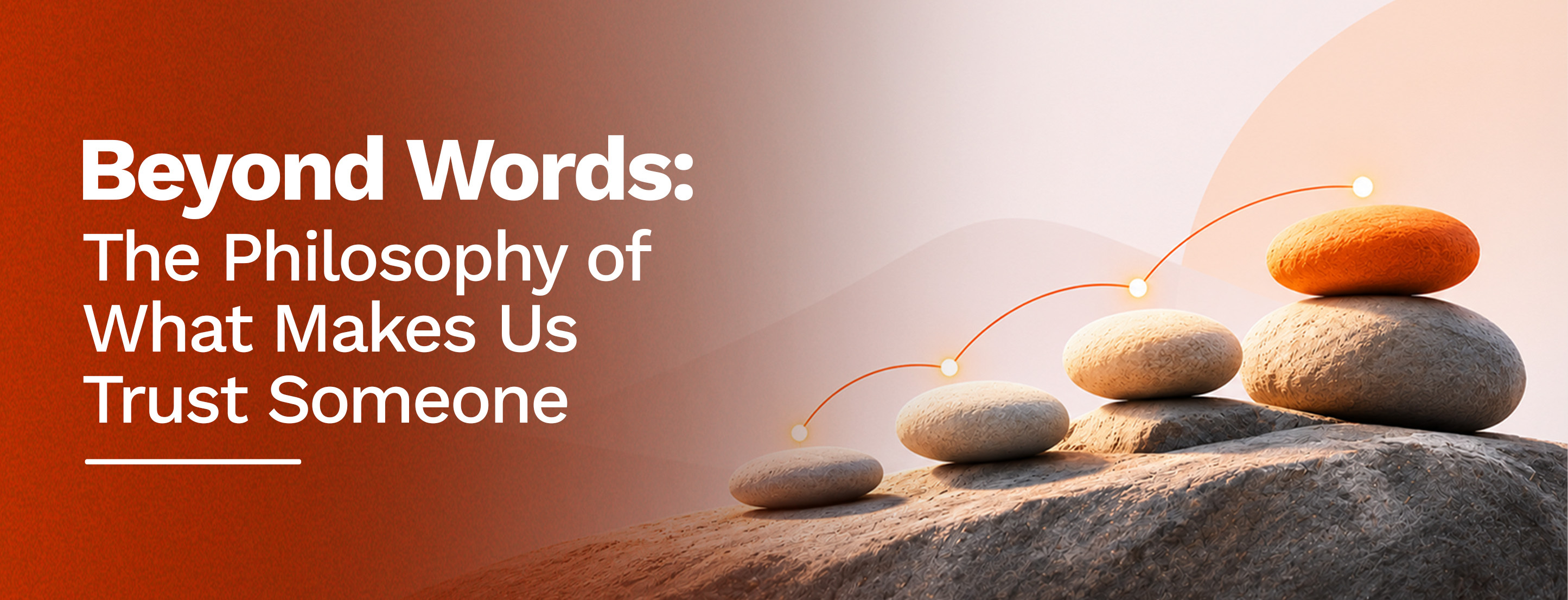

Trust is an interesting thing.
We cannot demand it, negotiate it, or manufacture it overnight. Yet, almost everything meaningful in human relationships depends on it.
Think about the people you trust. What makes you trust them? Is it their honesty? Their ability to keep promises? The way they make you feel? Or simply the fact that they have never given you a reason to doubt them?
We often assume that trust is earned by convincing people that we are trustworthy. But perhaps trust is less about convincing and more about demonstrating.
It is not just about what we say. It is about who we are, how we treat people, and whether our actions give others a reason to feel secure around us.
Interestingly, this idea has roots in ancient Greek philosophy.
Aristotle, one of the most influential philosophers in history, identified three fundamental modes of persuasion: Ethos, Pathos and Logos.
Although he introduced these concepts to explain how people persuade others, they offer an interesting lens through which we can understand how trust develops.
Let's look at them.
Ethos is about credibility, character and reputation.
Imagine two people who frequently talk about honesty and integrity. One consistently follows through on commitments, takes responsibility for mistakes and gives credit where it is due. The other talks about these values but rarely demonstrates them.
Whom would you trust?
Most likely, the first person.
Why? Because credibility is not established through self-proclaimed virtues. It is established through repeated behaviour.
We don't trust someone simply because they tell us they are honest. We trust them when their actions repeatedly give us reasons to believe it.
This is particularly important in professional relationships. A leader who makes promises but fails to deliver eventually loses credibility, regardless of how persuasive their communication might be.
Ethos reminds us that trust is a reflection of character, not a marketing statement about ourselves.
Pathos is about emotional connection.
Human beings are not entirely rational creatures. We don't evaluate every relationship through facts, evidence and logical reasoning. We also pay attention to how people make us feel.
Think about someone who listens without interrupting, understands your concerns without immediately judging you, and makes you comfortable enough to be vulnerable.
You gradually develop trust in that person.
Now imagine sharing a difficult professional experience with two colleagues.
One immediately points out everything you did wrong. The other listens, acknowledges your frustration and then helps you find a solution.
Both might offer equally valuable advice. But the second person may earn your trust more easily because they first made you feel understood.
This is the emotional dimension of trust.
It is not about agreeing with everything someone says or constantly making them feel good. It is about creating an environment where people feel heard, respected and safe enough to express themselves.
Pathos reminds us that people don't just remember what we say; they remember how they felt when they were around us.
Logos represents logic, reasoning and evidence.
Credibility might make someone believable, and emotional connection might make them approachable. But sound reasoning gives people something concrete to rely on.
Imagine a colleague proposing a new business strategy. One simply says, “Trust me, this will work.” Another explains the reasoning behind the proposal, presents relevant evidence, acknowledges potential risks and answers difficult questions.
Whose judgement would you be more comfortable relying on?
Probably the second person's.
This is because trust also requires intellectual confidence. We want to know that the people we depend on can think critically, make informed decisions and explain their reasoning.
In professional environments, this becomes particularly important. A leader cannot build lasting trust through charisma alone. People also need confidence in their decisions.
Logos reminds us that trust becomes stronger when confidence is supported by reasoning rather than mere assertion.
While Ethos, Pathos and Logos provide a fascinating foundation, trust is much more complex than three modes of persuasion.
There are other elements that influence whether we feel comfortable depending on someone.
Consistency: Trust is rarely built through one extraordinary gesture. It develops through ordinary, repeated experiences. When someone's behaviour remains dependable across different situations, we begin to feel that we can rely on them.
Vulnerability: Trust involves a certain willingness to be exposed. When people acknowledge their mistakes, admit uncertainty or allow themselves to be seen beyond their carefully constructed image, they create opportunities for genuine connection. Vulnerability does not mean sharing everything with everyone. It means being authentic enough to let others see that we are human.
Reciprocity: Trust cannot survive indefinitely as a one-sided arrangement. It requires mutual effort, respect and consideration. When one person is always expected to be understanding, accommodating and dependable, the relationship gradually becomes imbalanced.
Emotional Safety: Perhaps one of the most underrated aspects of trust is the freedom to be yourself around someone. You don't constantly have to calculate your words, hide your imperfections or fear that every disagreement will damage the relationship. Emotional safety allows people to express themselves without feeling threatened by judgement or humiliation.
Together, these qualities make trust more than a feeling. They make it an experience that develops between people.
At MIDCAI, we believe that workplace growth is not just about individual performance, productivity or achieving targets. It is also about the environment in which people work, collaborate and evolve.
And trust sits right at the centre of that environment.
Think about it. Can a team truly innovate if its members are afraid to question ideas? Can people grow if admitting a mistake is seen as a weakness? Can collaboration flourish if individuals are constantly competing for recognition rather than building something together?
Probably not.
A healthy workplace requires more than skilled individuals. It requires people who can depend on one another, communicate openly, take accountability and respect different perspectives.
This is where Aristotle's three principles become relevant beyond philosophy.
These are not merely qualities that make someone a good colleague or leader. They are the foundations of a workplace where people can do meaningful work and grow together.
At MIDCAI, we see professional growth as more than becoming better at what we do. It also involves becoming more aware of how we work with others, how we respond to challenges and how we contribute to the people around us.
Because a workplace that prioritises trust doesn't just create better working relationships. It creates room for better ideas, stronger collaboration and collective growth.
The real measure of a workplace is not just what its people achieve individually, but what they become capable of achieving together.
We often associate trust with significant events: someone standing by us during a crisis, keeping a major promise or helping us through a difficult phase.
But trust is frequently built much earlier, in moments that seem almost insignificant. It is in someone remembering a commitment they made weeks ago. It is in a colleague giving you credit for an idea when they could have easily taken it themselves. It is in a friend respecting something you shared in confidence. It is in a leader admitting, “I don't know,” instead of pretending to have all the answers.
These moments rarely attract attention. Yet, they quietly shape how we perceive people.
And perhaps that is what makes trust so fascinating. We might not consciously notice every action that builds it, but we certainly notice when the pattern breaks.
One broken promise may not destroy trust, just as one good gesture may not establish it. But repeated behaviour creates expectations, and those expectations eventually become the foundation of our relationships.
Here is something worth thinking about. We want people to trust us, but we don't always behave in ways that make trust possible. We want others to be vulnerable with us, but hesitate to show our own imperfections. We expect consistency from others, but sometimes make exceptions for ourselves. We want to be understood, but don't always make the effort to understand.
Perhaps the biggest mistake we make is treating trust as something we should receive rather than something we must actively contribute to.
Trust is not a transaction where one person gives honesty and expects loyalty in return. It is an ongoing process of demonstrating that another person's dependence on us will not be taken lightly.
And that requires more than good intentions. It requires awareness, accountability and consistency.
Aristotle's Ethos, Pathos and Logos were originally about persuasion. But when we look at them through the lens of trust, they reveal something much deeper about human relationships.
Our character gives people a reason to believe in us. Our empathy gives them a reason to feel safe around us. And our reasoning gives them confidence in our judgement.
But none of these can be established through words alone.
You can tell someone you are dependable, but only your actions can demonstrate it. You can tell someone you understand them, but only your willingness to listen can prove it. You can claim to make good decisions, but only the quality of your judgement can establish that confidence.
Perhaps the simplest way to understand trust is this:
Trust is what happens when your words, actions and intentions become consistent enough for someone to feel safe depending on you.
Because, ultimately, earning trust isn't about becoming someone people believe. It's about becoming someone they have good reason to believe in. And perhaps that is where meaningful workplace growth begins, too.

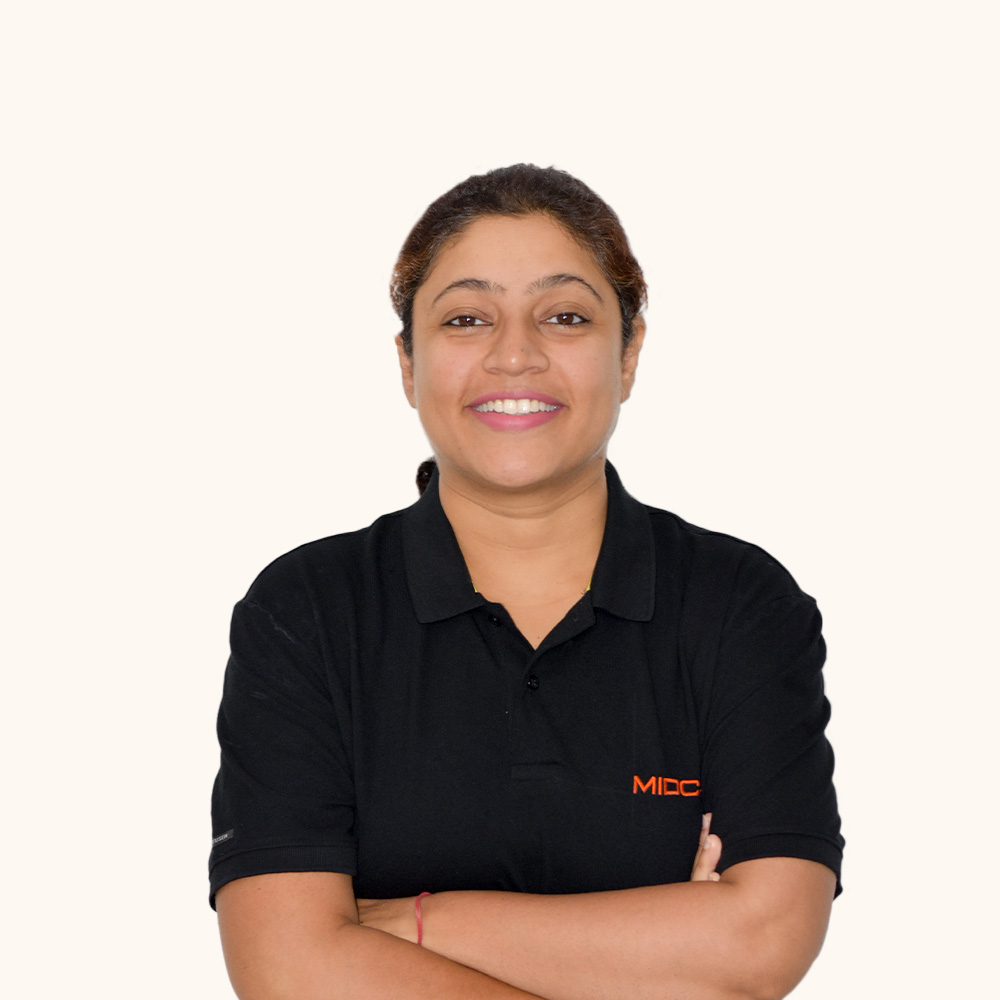
Currently working as a QA Intern at MIDCAI, I’m learning the ropes of software testing, understanding project workflows, and growing through hands-on experience in a fast-paced environment. Beyond tech, I’m deeply interested in writing, workplace dynamics, and exploring the realities of office culture through observations and conversations.
Get in touch with us for any enquiries and questions
Define your goals and identify areas where technology can add value to your business
We are looking for passionate people to join us on our mission.
where your skills fuel innovation and your growth powers ours