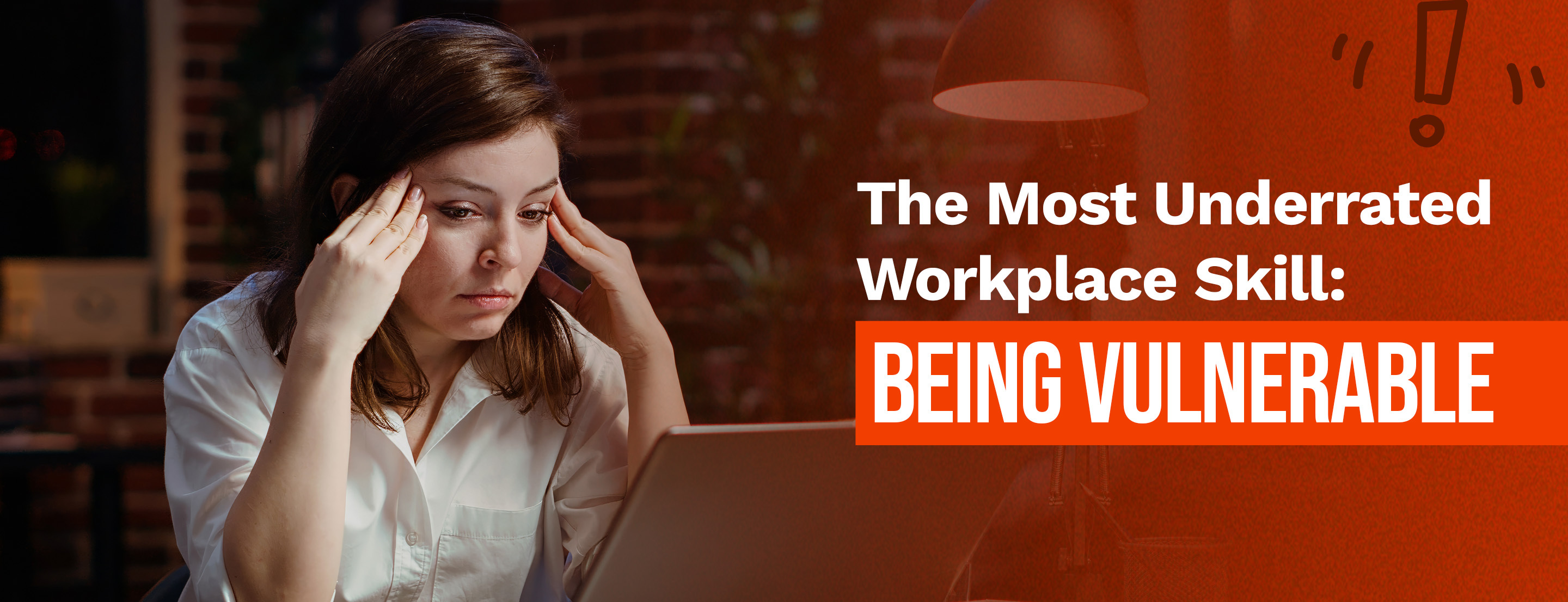


A few days ago, our co-founder at MIDCAI, Anil, gathered us for a conversation about the kind of culture he wants to build. He didn't talk about ambitious goals, aggressive growth, or productivity metrics. Instead, he spoke about something far less common in workplace conversations: vulnerability.
He said he wanted people to feel comfortable enough to be vulnerable at work. I'll admit, that statement caught me off guard.
My first thought was, "Why would a leader want that?"
We've spent most of our professional lives learning to do the exact opposite.
Somewhere along the journey from our first job to where we are today, many of us learned that being "professional" meant showing as little vulnerability as possible. So hearing a leader say, "I want people to be vulnerable," felt almost contradictory.
But the more I reflected on his words, the more I realized he wasn't encouraging weakness. He was describing something much more powerful: a workplace where people don't have to waste energy pretending they're perfect.
And that made me think, perhaps vulnerability isn't something that weakens teams. Perhaps it's what allows them to become stronger.
Imagine you're leading a team. Every status update is "Everything's on track." Every meeting ends with, "No questions." Every idea is met with silent agreement. Every deadline is achieved until, suddenly, it isn't.
On paper, everything looks perfect. But beneath the surface?
People are confused but afraid to ask. People disagree but choose silence. People struggle alone because asking for help feels like admitting weakness. People make mistakes but spend more energy hiding them than fixing them.
As a leader, this is one of the hardest environments to lead. Not because people aren't capable. But because you're leading filtered versions of them. You're making decisions based on incomplete truths. A leader doesn't need a team that looks perfect. A leader needs a team that's honest. Because honesty gives leaders something perfection never can:
The chance to help.
Now let's switch seats.
You're the employee. You hear your manager say, "I want everyone to speak openly." "Don't hesitate to ask questions." "It's okay to make mistakes."
You nod. But inside, another voice speaks louder. "If I admit I don't know, will they think I'm not good enough?" "If I challenge an idea, will I be seen as difficult?" "If I ask for help, will it affect my performance review?" "If I'm honest about struggling, will someone else replace me?"
These fears aren't irrational. Many of us have worked in environments where vulnerability had consequences. Where one mistake became a label. Where speaking up was mistaken for complaining. Where asking questions was seen as incompetence.
So when a leader asks us to be vulnerable, Our mind hears,
"Take a risk."
This is where most workplaces get stuck.
Leaders say, "Be open."
Employees think, "Is it actually safe?"
Leaders encourage mistakes as learning opportunities. Employees wonder whether those mistakes will quietly be remembered during promotions. Leaders ask for honest feedback. Employees rehearse the safest possible version of the truth. Neither side is wrong.
They're simply protecting what matters most to them. The leader wants the truth. The employee wants security.
When we talk about vulnerability at work, it's easy to misunderstand what it actually looks like. It isn't about saying everything that comes to mind, oversharing personal struggles, or lowering professional standards. In fact, true workplace vulnerability is often quiet and subtle. It shows up in moments that require courage rather than confidence.
It's admitting that you need help before a small problem becomes a major one. It's owning a mistake instead of hiding it. It's asking a question when everyone else appears to understand. It's respectfully offering a different perspective or having the courage to say, "I don't think this is working."
These conversations are rarely comfortable. They make us feel exposed because they challenge the image we've worked hard to build, that of someone who always knows, always delivers, and rarely falters. Yet these are the very conversations that prevent misunderstandings, strengthen collaboration, and help teams solve problems before they grow into crises. Vulnerability, then, is not the absence of professionalism; it is a commitment to honesty in service of better outcomes.
However, vulnerability cannot exist in isolation. It is built on trust, and trust is a shared responsibility.
Leaders cannot simply encourage people to "be vulnerable" and expect it to happen overnight. They must first create an environment where vulnerability feels safe. Every reaction to a mistake, every response to a difficult question, and every conversation after a setback sends a powerful message. Employees are constantly, often subconsciously, asking themselves one question: "Is it truly safe to be honest here?" The answer isn't determined by what leaders say, it is determined by how they respond when honesty is tested.
At the same time, employees also play an important role. If a leader consistently demonstrates empathy, welcomes questions, treats mistakes as opportunities to learn, and encourages respectful disagreement, then choosing silence out of habit or fear only limits the very culture everyone hopes to create. Trust grows when it is reciprocated. It takes courage for leaders to create psychological safety, but it also takes courage for employees to step into that space.
The first step may come from either side. A leader might admit they don't have all the answers, giving others permission to do the same. Or an employee might choose to ask the difficult question everyone else is avoiding. What matters is that someone is willing to break the cycle.
Because in the end, the strongest workplace cultures are not built by people who never appear vulnerable. They are built by leaders who earn trust and employees who choose to honor it with honesty. That's where meaningful collaboration begins, and where the best work is often born.
When Anil spoke about building a culture of vulnerability, I initially thought he was asking people to be less guarded.
Now, I think he was asking us to be more human.
Because vulnerability isn't about exposing every emotion or admitting every insecurity. It's about having the courage to replace pretense with honesty. To say, "I need help," instead of struggling in silence. To say, "I made a mistake," instead of hiding it. To say, "I see this differently," instead of agreeing just to fit in.
For leaders, the challenge is to create an environment where these conversations don't come with consequences, but with support. For employees, the challenge is to believe that trust is worth reciprocating when it is genuinely offered.
Neither side can build this culture alone.
A leader can open the door, but people have to feel safe enough to walk through it. And perhaps that's what great workplace cultures are really built on, not flawless execution, but fearless honesty.
In a world where everyone is trying to appear capable, maybe the most underrated workplace skill isn't confidence after all. Maybe it's having the courage to be vulnerable.

Working as Manager – People and Admin in a dynamic environment at MIDCAI, I’m passionate about creating people-first processes, building purposeful teams, and driving operational efficiency. I thrive on meaningful collaboration and continuous learning. Whether it’s supporting team growth, creating systems that empower people, or adapting to a rapidly evolving tech landscape, I bring heart and hustle to every challenge.
Get in touch with us for any enquiries and questions
Define your goals and identify areas where technology can add value to your business
We are looking for passionate people to join us on our mission.
where your skills fuel innovation and your growth powers ours