

The other day, while working on Salesforce security settings, I had a strange thought: Why am I better at protecting company data than protecting my own peace?
As Salesforce professionals, we spend hours configuring OWDs (Organization-Wide Defaults). We carefully decide who should see what, who shouldn't, and what should remain private unless access is intentionally granted. Yet somehow, in real life, I seem to operate with the exact opposite setting.
A random comment about my work? Access granted. A piece of office gossip? Access granted. Someone's unsolicited opinion about my career? Access granted. A passing remark that probably wasn't even meant for me? Access granted. By the end of the day, my mind is carrying conversations, assumptions, and opinions that I never even asked for. And most of them aren't useful.
What fascinates me is how quickly we allow external noise into our mental space. A colleague's observation can occupy our thoughts for hours. A comparison can stay with us for days. A careless comment can influence our confidence more than months of hard work. The strange part is that we rarely stop to ask: Does this information deserve access in the first place?
Instead, we absorb it automatically. Every comment gets a meeting in our head. Every opinion gets a seat at the table. Every rumor gets free accommodation. No wonder we feel mentally cluttered.
That day, I realized I needed an OWD for life. Not because I want to shut people out. Not because feedback isn't important. But because not everything deserves immediate access to my attention, emotions, or peace of mind.
Some things should arrive with the default setting i.e. Private.
A rumor about a project? Private until verified. An opinion about how I should manage my career? Private until evaluated. A comment that triggers self-doubt? Private until I decide whether it contains anything worth learning from. The goal isn't to ignore information. The goal is to stop granting automatic access.
In Salesforce, overexposing data creates risks. In life, overexposing our minds creates exhaustion. Every unnecessary thought consumes energy. Every unverified story takes up space. Every irrelevant opinion demands processing power. Over time, we become emotionally busy handling information that was never meant to matter. The problem isn't that people have opinions. The problem is that we often promote those opinions to a level of importance they haven't earned.
One thing Salesforce teaches us is that access should be intentional. The same principle can apply to our daily lives. Not every voice deserves influence. Not every conversation deserves emotional investment. Not every piece of feedback deserves equal weight. Some people have earned access because they consistently help us grow. Others simply happen to be nearby. The two are not the same.
I've started asking myself a simple question: If this person didn't say it, would I still believe it? The answer is often surprisingly revealing.
There is also a middle ground. Not everything needs to be accepted or rejected immediately.
Sometimes information can simply exist. You hear it. You acknowledge it. You don't absorb it. You don't react to it. You don't allow it to change your mood.
You simply observe it.
That's the emotional version of Public Read Only. Visible, but not editable.
The best Salesforce security models follow the principle of least privilege. Access is not granted because it can be. Access is granted because it should be.
The more I think about it, the more I believe peace works the same way.
Not every opinion deserves influence. Not every comment deserves reflection. Not every conversation deserves a place in our minds.
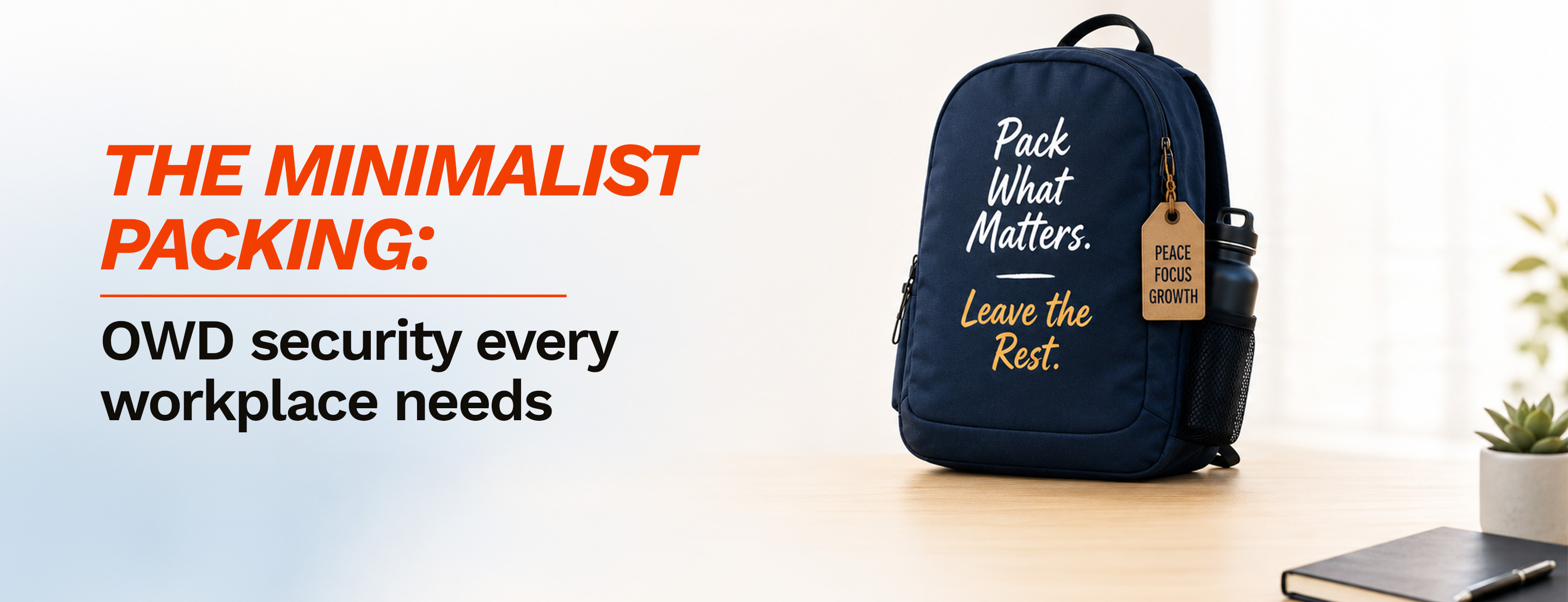
And perhaps that's what minimalist packing really means in the workplace.
When we travel, we don't carry everything we own. We take only what serves a purpose. Yet mentally, many of us do the opposite. We carry every comment, every comparison, every rumor, and every unsolicited opinion long after the moment has passed.
The result is unnecessary weight. Maybe the goal isn't to collect more thoughts, reactions, and expectations. Maybe it's to travel through our workdays carrying only what helps us grow and leaving the rest behind.
So the next time a comment, rumor, or unsolicited opinion comes your way, think like a Salesforce Admin. Start with the default setting. Review carefully. Grant permissions intentionally.
Because the lightest minds, like the best-packed bags, aren't empty. They're simply carrying only what matters. And remember:
Just because someone has an opinion doesn't mean they automatically get access to your inner world.

Working as Manager – People and Admin in a dynamic environment at MIDCAI, I’m passionate about creating people-first processes, building purposeful teams, and driving operational efficiency. I thrive on meaningful collaboration and continuous learning. Whether it’s supporting team growth, creating systems that empower people, or adapting to a rapidly evolving tech landscape, I bring heart and hustle to every challenge.
Get in touch with us for any enquiries and questions
Define your goals and identify areas where technology can add value to your business
We are looking for passionate people to join us on our mission.
where your skills fuel innovation and your growth powers ours